
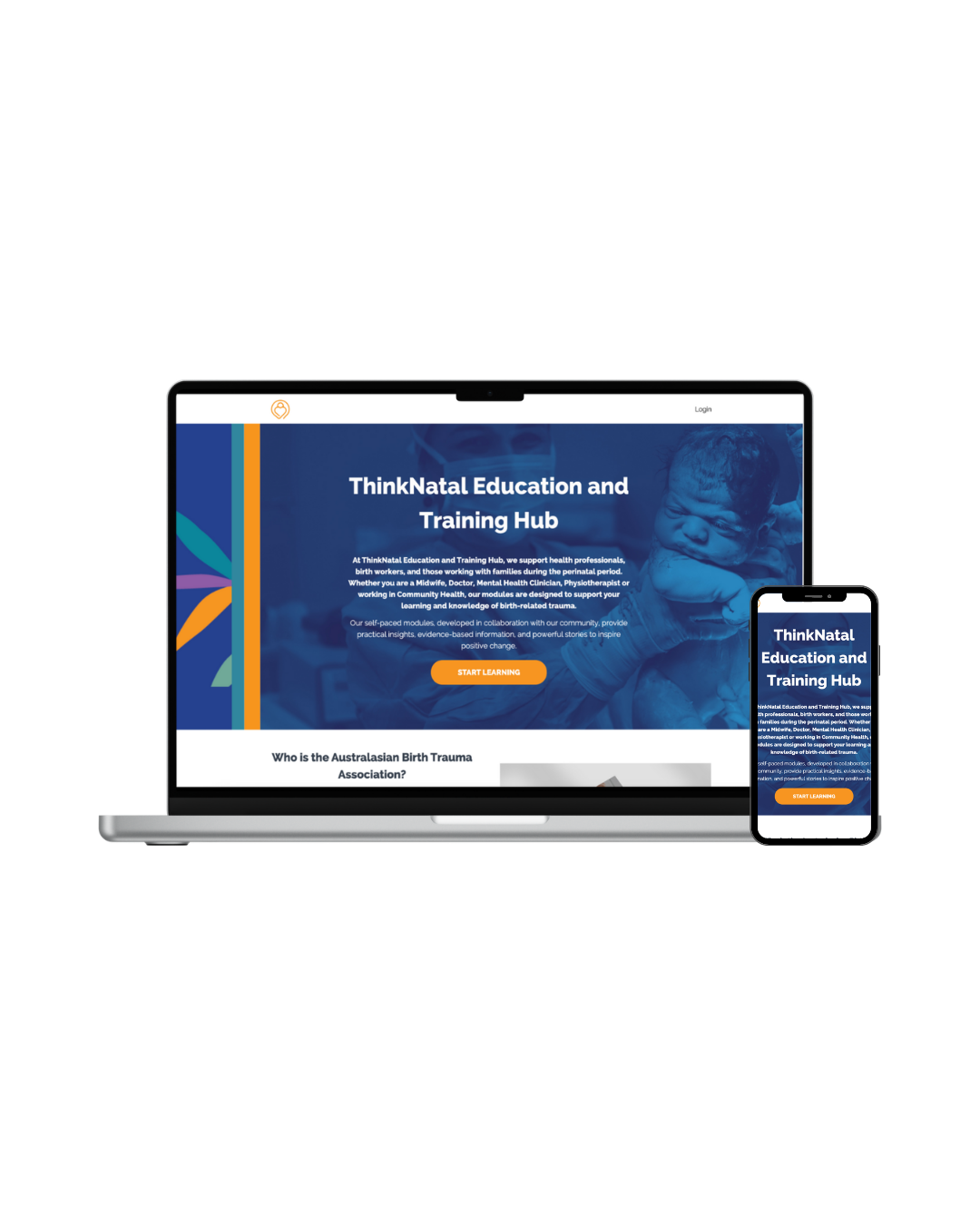
ThinkNatal™ Education and Training is for health professionals, community workers and others working with women+ and their families across the perinatal period.
As Australia’s leading charity for birth-related trauma, Birth Trauma Australia is leading national change in the way birth trauma is understood, prevented and responded to. Our CPD-accredited training brings together current evidence, clinical expertise and the lived experiences of people affected by birth-related trauma to build practical skills and confidence in trauma-informed care.
Whether you’re a midwife, doctor, mental health clinician, pelvic physiotherapist, community health professional or another member of the perinatal care team, ThinkNatal™ Education and Training offers accessible, self-paced learning to help you recognise trauma, respond with compassion and create safer, more respectful experiences of care.
Featured Courses



Who is ThinkNatal™ Education and Training for?
ThinkNatal™is for professionals working with women+ and their families across pregnancy, birth and the postnatal period.
Our training is relevant to:
- Midwives and maternity nurses
- Obstetricians, doctors and other medical practitioners
- Child health nurses
- Mental health clinicians
- Physiotherapists and allied health professionals
- Community health workers
- Doulas
- Childbrth educators
- Peer workers and support workers
- Students and professionals developing their knowledge of birth-related trauma
You don't need to be a trauma specialist to benefit from trauma-informed training.
You might be looking to better understand birth-related trauma, build confidence responding to someone who has experienced it, strengthen your communication and consent practices, or support colleagues who have been affected by traumatic events in their work. ThinkNatal™ provides practical education that can be applied in real-world settings, from the consultation room and hospital ward to community services and conversations with families.
What you'll learn
ThinkNatal™ Education and Training combines evidence, professional expertise and lived experience.
Our courses explore the prevention, recognition and response to birth-related trauma, with a focus on what professionals can do in their everyday practice.
Depending on the course, you’ll learn about:

Understanding trauma
Understanding birth-related trauma: What birth-related trauma is, how it can present, who it can affect and why it can be missed.
Recognising and responding to trauma: How to recognise signs that someone may be struggling and respond in ways that support, rather than unintentionally increase distress.

Trauma-informed care
Trauma-informed care: How trauma can shape a person’s experience of healthcare, and practical ways to create safer and more respectful care environments.
Communication and consent: How the way we communicate, explain procedures and support decision-making can influence a person’s experience of safety and control.

Support
Supporting recovery: Understanding appropriate responses, referral pathways and support options for people affected by birth-related trauma.
Supporting health professionals: Recognising the impact that witnessing or being involved in traumatic births can have on maternity and healthcare workers, and understanding how to support ourselves and our colleagues.
CPD Accreditation
Professional development should be more than a box to tick.
ThinkNatal™ courses are CPD-accredited, giving health professionals the opportunity to build their knowledge of birth-related trauma while meeting their professional development requirements.
Our education is designed to support reflective practice and strengthen the skills you use in your day-to-day work.
Testimonials
“I completed the 'Understanding Birth Trauma' modules, expecting to learn about the factors influencing birth trauma and the real-life implications of trauma. The training fulfilled my expectations, but it did far more for my practice as a midwife and re-ignited the purpose that fuels my work. I was shocked by how quickly I noticed the impact of completing this course. In the immediate shift following, two of the four women I was caring for stated that they appreciated the time and care I had taken to explain difficult outcomes and challenging antenatal choices.”
– Emily, Midwife, online learner
“The training was very informative and complete. The lived stories highlighted the great need for change within our health system and how we, in our roles, can begin to make small changes such as informing, making sure partners are included and advocating for change.”
– online learner
“Brilliant, engaging and interactive”
– online learner
Training for your team
Looking for specialised trauma-informed, birth trauma training for your hospital, service or practice? We also offer tailored in-person training for organisations and teams.
We can work with you to develop an education experience that reflects the needs of your workforce, whether you're looking for an introduction to birth-related trauma, deeper training in trauma-informed care, or education focused on a particular area of practice such as antenatal education or establishing birth reflection services.
Training can be delivered in person or tailored to suit your organisation, schedule and learning needs.
Our trauma-informed workshops are designed to give health professionals the knowledge, confidence and practical skills to bring evidence-based, compassionate care into their everyday work.
Contact us to find out more.

What our training achieves
Feedback from 57 participants across three recent Australian workshops showed consistently strong outcomes:
- 100% reported increased understanding of birth-related trauma and its impacts.
- 100% reported increased confidence in supporting birth reflection.
- 100% felt prepared to apply what they had learned in their workplace.
- 91% said the content and case studies were relevant to their professional practice.
- 95% agreed that the facilitation, materials and activities supported their learning.
These results demonstrate the value of creating dedicated space for health professionals to build knowledge, develop practical skills and strengthen trauma-informed care.
